 NEW WHITEPAPER • Become a Frontier Firm
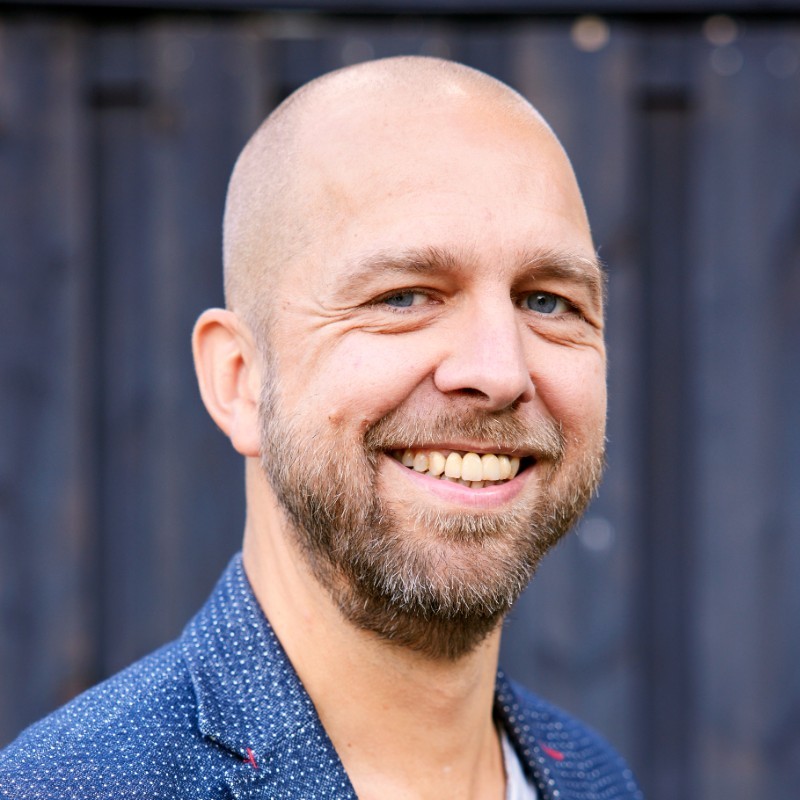
With eleven years as a Microsoft MVP and a seat among Microsoft’s Regional Directors, Maarten Eekels recently joined Cronos Nederland as Microsoft Tech Lead. We sat down with him to talk about community, AI, and the future of our profession.
Maarten in a nutshell
Expertise
Microsoft Foundry, AI & Microsoft 365
Company
Cronos Nederland
Favourite apps
Strava, Garmin Connect & Microsoft Teams
Favorite quote
“Dare to experiment and dare to fail.”
From SharePoint pioneer to advanced sommelier
Based near Breda, Maarten (51) is a family man and a passionate sportsman. A lifelong footballer turned cyclist, he still gets moving around five times a week.
His Microsoft story started in the early 2000s. In 2010, he decided he could do what he did for a boss himself. He joined Portiva, a Dutch SharePoint specialist, as a managing partner. “Back then, SharePoint was the odd one out in the Microsoft portfolio. Everyone was busy with Active Directory, Exchange, or Windows. So there was a good market fit.” Eleven years later, Portiva had grown to 90 people and was acquired by Rapid Circle, where Maarten stayed on as CTO for a few more years.
After leaving, he took a six-month sabbatical to cycle, do odd jobs around the house, and finish his biggest hobby: wine. Maarten completed WSET Level 4, the highest level of the Wine & Spirit Education Trust, after two years of classes, five theory exams, three tasting exams, and a dissertation. “I was in class with the sommelier of a two-star restaurant and the head wine buyer of Ahold Delhaize. And then there was this one IT guy,” he grins.
Putting Microsoft on the map in the Netherlands
After half a year off, the timing was right when Martin Koersen, managing director of Cronos Nederland, called. Maarten already knew Cronos through familiar faces in the community. In April, he started with a clear mission: put Microsoft on the map within Cronos Nederland.
Cronos Nederland has around 300 people, and while many great solutions are already built on Microsoft and Azure, the Microsoft story is still scattered. “My goal is that in a few years we can offer the full Microsoft portfolio in the Netherlands with the companies we have,” Maarten explains. “That means connecting the companies already working with Microsoft, so they know what each does and can approach clients together. And building a relationship with Microsoft Netherlands, because that hardly exists yet.”
“I can build on everything MiCRONOS has already set up here. That knowledge is fantastic.”
For that, he works closely with Michiel and MiCRONOS in Belgium. “I can build on everything MiCRONOS has already set up here. That knowledge is fantastic.” Unlike a purely strategic role, Maarten also likes to get his hands dirty. “I’m not hard sales, but I am a very good presales. And I like to stand in the mud every now and then.”
He also sees a clear opportunity. “On Microsoft 365 and Copilot, we have very little in the Netherlands. Under the Cronos umbrella, no company focuses on it yet. Many specialized boutiques have been swallowed by large players focusing only on workplace and Azure. So there’s real room for growth.”
Not a director, but a direct line to Microsoft
This is Maarten’s eleventh year as a Microsoft MVP, recognized in two categories, Microsoft Copilot and Microsoft Foundry. Since 2018, he has also been a Microsoft Regional Director, a much smaller club: fewer than 200 worldwide, compared to some 3,000 to 3,500 MVPs.
“We’re not directors, and people often ask if I work for Microsoft. I don’t.” Where an MVP is tied to a technology stack and driven by community contributions, a Regional Director works across technologies and advises clients at board level. “It’s an advisory council to Microsoft’s senior leadership. “
After all those years, community remains at its heart. Maarten speaks at conferences, organizes meetups and sits on the board of DIWUG, the Dutch Information Worker User Group behind CollabDays (formerly SharePoint Saturday). But he does see the community changing. “Ten years ago, going to a user group meeting after work was completely normal. Since COVID, people guard their work-life balance more. For a few years now, we’ve been asking ourselves whether CollabDays, which we’ve organized on a Saturday for fifteen years, should move to a weekday.”
“It doesn’t really matter how you contribute, as long as you contribute to the community.”
AI doesn’t replace us; it helps us
AI has changed how Maarten starts his day. “I have an agent that collects all relevant AI news from the past 24 hours every night and has it ready for me in the morning in Teams, both as text and audio. I can read it at breakfast or listen while walking the dog or in the car.” One condition: every item comes with its source. “I always want to check: should I believe this, or is it a hallucination?” Besides his agent, he swears by the computable.nl newsletter and the AI Engineers website, where he regularly writes articles himself.
He hardly builds slide decks anymore. “AI builds my PowerPoint deck. My prompt is long because I put my entire storyline in it. I decide what goes into the slides, AI builds the deck, and then I make adjustments.”
For IT companies, Maarten sees three fronts where things need to change. “One: how do we use AI ourselves, from agentic development to consultancy? Two: how do we price it? Clients expect us to work faster thanks to AI, but we need to invoice those tokens somehow. Three: how do we help clients really put AI into production? Many organizations run pilots and proofs of concept, but turning them into real added value is still a challenge.”
“Used well, AI helps you work faster, more efficiently and at a higher quality. Used badly, quality goes down.”
Communicating about your own AI use is a balancing act, he adds. “On one hand, clients expect it. On the other, as soon as you say AI, some feel the output is worth less. That’s why we all need to learn to use AI properly. Prompting and fact-checking afterward are crucial.”
Keep betting on young talent
For developers, AI is a different story. “A good developer barely writes a line of code anymore. They use agents.” Maarten has met developers who no longer enjoy their jobs because a colleague running twenty agents delivers faster. Juniors also find it harder to land their first role. “But we need exactly that knowledge of patterns and design to use those agents properly.”
That’s why he makes a strong case for hiring young talent. “If we don’t hire them now, they’ll never get the chance to become medior or senior. Ten years ago, we would have hired a strong graduate on the spot. Today, everyone hesitates.” He believes interns and recent graduates are exactly the ones experimenting with new tools. “With the help of AI, they can get up to speed quickly.”
His best piece of advice ties it all together. “The future won’t get simpler, but it will get smarter, and you need to keep up. Curiosity, daring to experiment, and daring to fail have always been important. In this field, they’re only becoming more important.”
